Agentic AI & Intelligent Automation
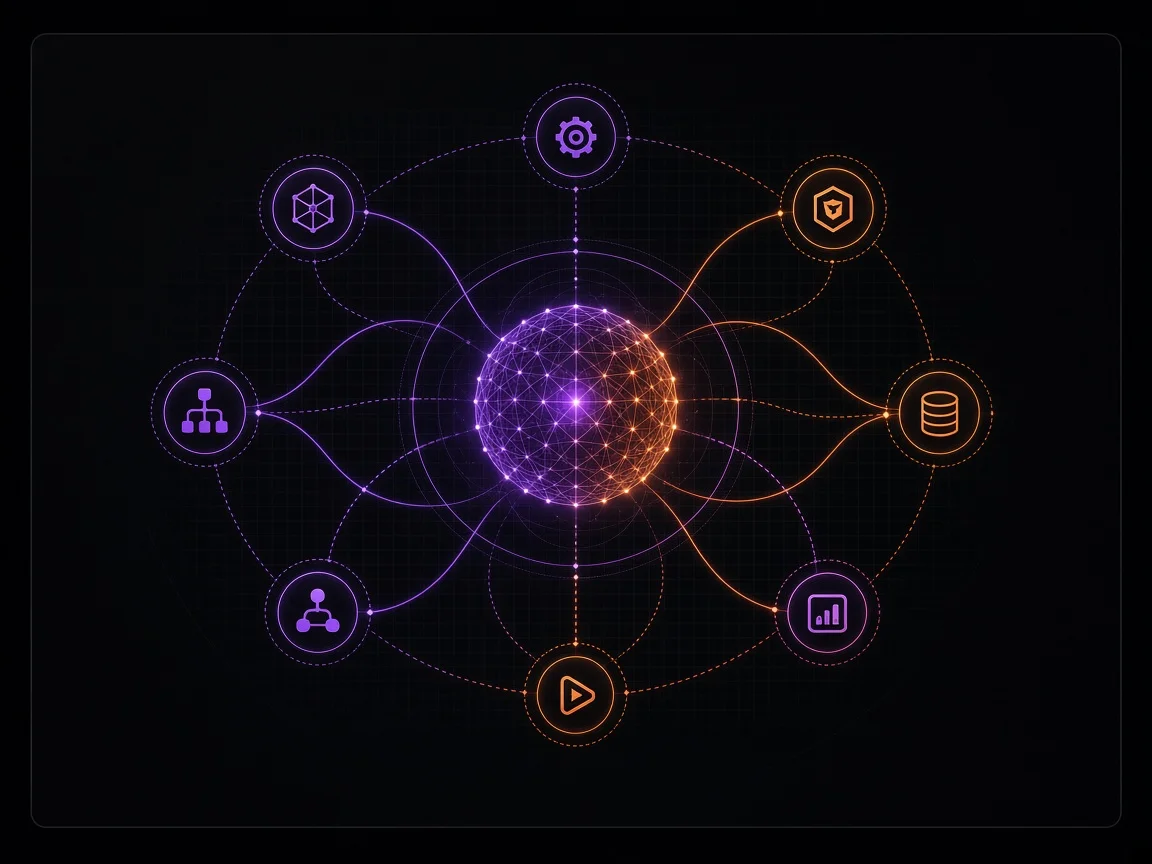
We build AI agents that do real work inside your business: investigating anomalies, producing reports, answering data questions, raising tickets and running campaign operations. The difference between an agent that demos well and one that survives production is almost never the model — it is the data foundation underneath, the permissions around the tools, and the evaluation that proves it is right. We build all three.
Challenges we solve
The pattern is consistent. A promising pilot answers questions impressively in a controlled demo. Then someone asks a question with an ambiguous metric definition, and the agent confidently invents one. Security asks what the agent can access and nobody has a clean answer. Someone asks how often it is wrong, and there is no measurement. The project quietly loses its sponsor. None of those are model problems. They are foundation, governance and evaluation problems, and they are all solvable. We work in that order deliberately: governed data and metric definitions first, then permissioned tools, then the agent, then the evidence that it works — because building in the other order is what produces stalled pilots. The symptom is always the same. Marketing quotes one conversion number, finance quotes another, and the meeting turns into a debate about the data instead of a decision about the business. We fix the collection layer first, prove it with test evidence, and then hand you the documentation that keeps it from drifting again.
What we deliver
Agentic analytics copilots
Copilots over GA4, BigQuery, CRM, ad platforms and enterprise data that support natural-language exploration, multi-step investigation, funnel and cohort analysis, anomaly detection, automated insight generation and explainable root-cause analysis — showing the query and the reasoning, not just an answer.
AI agents and workflow automation
Agents that reason, call tools and execute multi-step workflows across your existing systems: automated reporting, QA checks, research, ticket creation, campaign operations, incident analysis and stakeholder updates — with human approval gates wherever an action has consequences.
Enterprise knowledge agents and grounded AI
Assistants grounded in your own documents, databases, dashboards and business systems using retrieval, semantic search, context engineering and secure integrations — with citations back to source so an answer can be checked rather than trusted.
Agent tooling and enterprise integrations
Connecting agents to databases, APIs, CRM, analytics tools and productivity systems through function calling and MCP-compatible architectures, with scoped credentials, rate limiting, idempotency and structured error handling so a failed tool call degrades gracefully.
Conversions API and Enhanced Conversions
Meta CAPI, Google Enhanced Conversions for web and leads, LinkedIn CAPI, TikTok Events API and Pinterest API for Conversions — deduplicated against browser events, hashed correctly, and match-rate monitored after launch rather than assumed. This is usually where lost conversion signal is recovered.
Context engineering and grounding
The design work that determines whether an agent is reliable: retrieval strategy, chunking and embedding choices, instruction design, memory, tool selection, semantic context and access control — iterated against a test set rather than tuned by intuition.
Mobile and app measurement
Firebase and GA4 for Android and iOS, SDK implementation and review, app-to-web journey stitching, deep-link and campaign attribution, SKAdNetwork and Privacy Manifest considerations, and consistent event naming between app and web.
Agent governance, identity and access control
Least-privilege permissions, agent identity, authentication, approval workflows, audit trails and policy-based access control, so you can answer precisely what an agent can see and do — before security asks.
Evaluation, observability and LLMOps
Golden test sets, groundedness and hallucination measurement, task completion rates, tool-use accuracy, latency and cost tracking, tracing, regression tests in CI and dashboards that make quality visible to non-engineers.
AI security and red teaming
Testing against prompt injection, indirect prompt injection through retrieved content, data leakage, unsafe tool execution and privilege escalation — with practical defensive controls and a report your security team can review.
Responsible AI and production guardrails
Human oversight, confidence thresholds, refusal and fallback behaviour, content and action guardrails, model-risk controls and measurable quality standards agreed before launch.
Platforms & Tooling
- Claude
- OpenAI
- Vertex AI
- Amazon Bedrock
- Azure OpenAI
- BigQuery
- Snowflake
- Databricks
- dbt Semantic Layer
- MCP
- LangGraph
- Salesforce
- HubSpot
- HubSpot
- Slack
Process
Readiness audit
Data, tooling, governance and use-case scoring.
Semantic foundation
Metric definitions, verified queries, access model.
Agent build
Tools, context, guardrails — shipped in sprints.
Evaluate & harden
Golden set, red team, approval workflows.
Run & improve
Monitoring, regression tests, quarterly review.
FAQs
Not necessarily a full warehouse, but you do need a governed source of truth for whatever the agent will answer questions about. For a knowledge agent over documents, that means a curated corpus with access controls. For an analytics agent, it means defined metrics and verified queries. Skipping this step is the single most common cause of failed agent projects.
By not letting it invent one. The agent queries a governed semantic layer with defined metrics and verified query patterns rather than writing free-form SQL against raw tables. Where a question falls outside what is defined, the agent is built to say so and route to a human instead of guessing. Then we measure how often that behaviour holds on a golden test set.
Both, and the distinction matters. Read-only agents are straightforward to govern. Action-taking agents — creating tickets, updating records, adjusting campaigns — get scoped credentials, approval gates for anything consequential, idempotency, and a full audit trail of what was done and why.
We plan for it from the first week rather than meeting it at the end. That means agent identity and least-privilege scoping, deployment inside your cloud tenancy where residency requires it, model routing that respects data-handling commitments, logging that satisfies audit, and a red-team report your security team can actually read.
A readiness audit is a fixed fee over two to three weeks. A build sprint taking one agent to production is typically eight to sixteen weeks depending on integration surface. Running costs are model inference plus infrastructure, which we model per task during the build and cap with budgets and alerts — unbounded token spend is a real risk and we treat it as one.
Yes, within what consent allows. We implement Consent Mode v2 and CMP-aware firing rules so tags respect user choice, and we use consent-appropriate modelling and server-side collection to preserve as much legitimate signal as possible. That work is covered in detail on our Consent, Privacy & Data Governance page.
We pick up mid-stream regularly. The first step is an honest assessment of what is reusable — often the integrations and prompts are salvageable and the data foundation is what is missing. We will tell you if the right answer is to keep going with your current partner.
Whichever fits the task, the data-handling requirements and the budget — and we design so the model is swappable. Locking an architecture to one provider is an unnecessary risk in a market that changes this quickly.
Ready To Make Your Data Work Harder?
Let’s build a trusted measurement foundation that drives smarter decisions and measurable growth.